

ISO 27001 Threat Intelligence Report
$4.99
✔️ ISO 27001:2022 Compliant
✔️ Prewritten and Ready to Go
✔️ Auditors Approved
This Threat Intelligence Report Template simplifies how you communicate your security findings, providing a clear and actionable format to present emerging threats to management and technical teams.
Did you like this product? Add to favorites now and follow the product.
Description
The Ultimate ISO 27001 Threat Intelligence Report Template
You’ve gathered critical intelligence on a new phishing campaign or a vulnerability that’s actively targeting your industry. But how do you turn that raw data into a compelling report that drives action? Simply forwarding a technical alert to your leadership team won’t work, and a data dump won’t help your IT team prioritize. To be effective, threat intelligence must be communicated clearly, concisely, and with context.
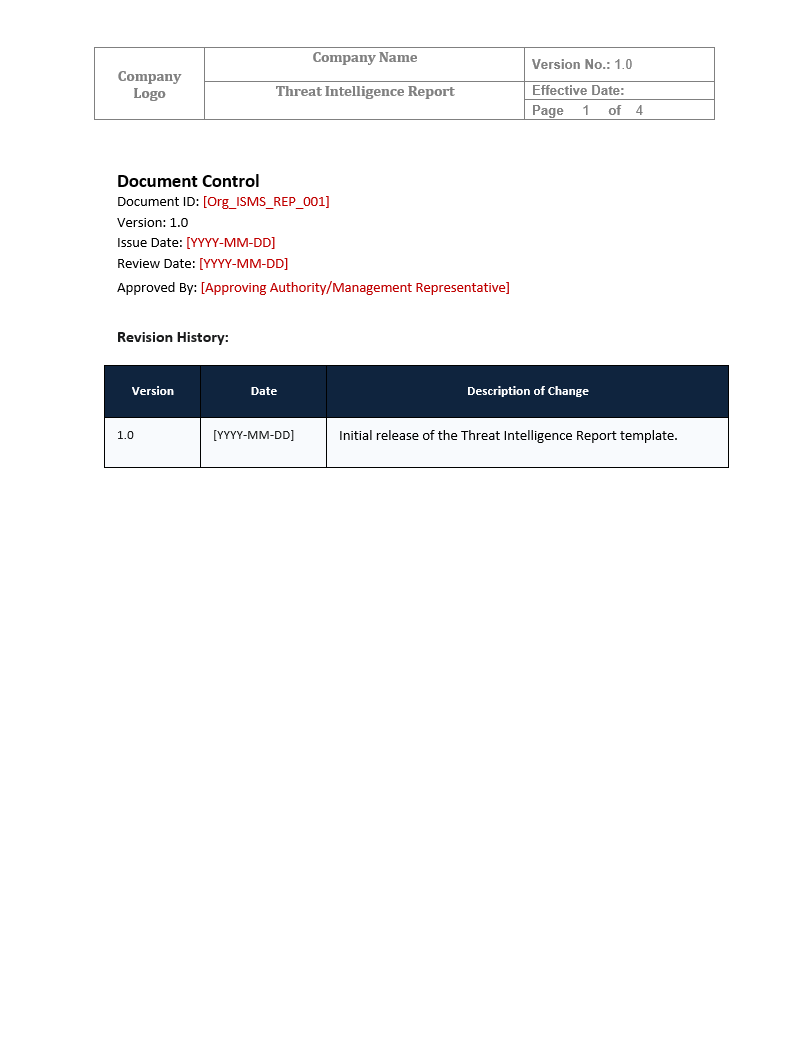
Our ISO 27001 Threat Intelligence Report Template provides a professional, structured format to present your findings for maximum impact. It helps you distill complex threat information into an easy-to-understand report with dedicated sections for an executive summary, detailed technical analysis, business impact assessment, and concrete, recommended actions. It ensures your message is heard, understood, and acted upon by the right people.
From the Experts at ISO 27001 Pro
From the experts at ISO 27001 Pro, this report template is designed for clear and effective communication. We understand that different audiences need different information. This template allows you to create a single, comprehensive report that serves both strategic decision-makers (with a clear ‘so what?’) and the technical responders who need the details to implement defenses.
In-Depth ISO 27001 Compliance Breakdown
This report template is a critical piece of evidence for ISO 27001:2022 Annex A Control 5.7 (Threat intelligence). While a process document defines how you’ll gather intelligence, these completed reports are the tangible proof for auditors that your process is active, effective, and adding value to your security program. Specifically, this template demonstrates:
- Dissemination of Intelligence: Using a formal report template shows you have a controlled method for communicating relevant intelligence to interested parties, a key part of the control.
- Actionable Recommendations: The template includes a dedicated section for ‘Recommended Actions’, proving that your intelligence is being used to make decisions and inform your defensive measures, as required by the standard.
- Documented Evidence: Each completed report serves as a formal record (documented information) of your threat intelligence activities, creating an auditable trail of your proactive security efforts.
FAQ: Common Questions about Threat Intelligence Reporting
- How is this template different from the ‘Threat Intelligence Process’ template? They work together. The Process Template is your ‘rulebook’—it defines how your organization will collect and analyze threat intelligence on an ongoing basis. This Report Template is the ‘output’ of that process—it’s the actual document you fill out and share each time you identify a significant threat you need to communicate to the business.
- Who is the intended audience for this report? This template is structured to serve multiple audiences simultaneously. The ‘Executive Summary’ and ‘Business Impact’ sections are written for senior management and decision-makers. The ‘Technical Details’ and ‘Indicators of Compromise (IoCs)’ sections are for your IT and security operations teams who will implement the technical defenses.
- How often should we produce a Threat Intelligence Report? You would produce a report on an as-needed basis whenever you identify a specific, credible threat that requires immediate action or awareness. Additionally, many organizations use this template to produce a regular summary report (e.g., monthly or quarterly) to provide leadership with an overview of the current threat landscape.
- What are ‘Indicators of Compromise’ (IoCs) and why are they in the report? IoCs are pieces of digital forensic data that indicate a potential intrusion or malicious activity. Examples include malicious IP addresses, URLs of phishing websites, the file hashes of malware, or unusual network traffic patterns. Our report template includes a specific section to list these IoCs so your technical teams can quickly use them to search system logs and update security tools like firewalls, endpoint protection, and SIEMs to block the threat.
Related products




Internal Audit Templates- Bundle
Original price was: $29.94.$20.00Current price is: $20.00.
Copyright 2026 © ISO 27001 PRO LLC. All right reserved.


Reviews
There are no reviews yet.