How to get iso 27001 certification

For modern businesses, achieving robust information security is no longer an option—it’s a necessity. Clients demand it, regulations require it, and your reputation depends on it. The most respected way to prove your commitment to security is through certification to a global standard. This brings many organizations to the critical question: how to get ISO 27001 certification?
While the thought of a formal certification process can seem overwhelming, it’s a structured journey with a clear path. Think of it not as a complex maze, but as a roadmap to building a resilient and trustworthy organization. Breaking the process down into manageable steps is the key to success.
This guide provides a practical, step-by-step roadmap for your ISO 27001 journey. At iso27001pro.com, we believe that with the right plan and resources, any organization can achieve this prestigious certification efficiently.
Before You Start: Laying the Groundwork
Jumping straight into implementation without proper planning is a recipe for failure. Before you write a single policy, focus on these foundational elements:

- Secure Management Commitment: ISO 27001 is not just an IT project; it’s a business initiative. You need enthusiastic buy-in from your leadership team. They must provide the necessary resources (time, budget, and personnel) and champion the importance of the Information Security Management System (ISMS) across the company.
- Define the Scope of Your ISMS: You must clearly define the boundaries of your ISMS. What does it cover? Will it be the entire organization, or specific departments, services, or locations? A well-defined scope keeps your project focused and manageable.
- Assemble Your Project Team: Designate a project manager or lead implementer. This person will coordinate the efforts, but they can’t do it alone. You’ll need input from various departments, including IT, HR, Legal, and Operations, to ensure the ISMS is integrated into your actual business processes.
The ISO 27001 Certification Roadmap: 7 Key Steps
With the foundation in place, you can begin the formal implementation process. Following these seven steps will guide you from your starting point to a successful certification audit.
Step 1: Conduct a Gap Analysis First, you need to understand where you are versus where you need to be. A gap analysis involves comparing your existing security practices against the requirements of the ISO 27001 standard. This will reveal your strengths and, more importantly, highlight the gaps you need to address.
Step 2: Plan the Project Treat the implementation like any other major business project. Create a detailed project plan with clear timelines, defined responsibilities, and a realistic budget. This plan will be your guide throughout the process and demonstrate to auditors that you have a structured approach.
Step 3: Perform a Thorough Risk Assessment This is the core of your ISMS. The goal is not to eliminate all risk but to identify, analyze, and treat it in a structured way. This process involves:
- Identifying information assets (e.g., servers, laptops, databases, customer data).
- Identifying threats to those assets (e.g., cyberattacks, employee error, natural disasters).
- Identifying vulnerabilities that threats could exploit.
- Evaluating the likelihood and impact of these risks materializing.
Step 4: Implement Controls and Documentation Based on your risk assessment, you will create a Risk Treatment Plan to mitigate unacceptable risks. This involves implementing security controls, many of which are listed in Annex A of the standard. Alongside this, you must develop the necessary documentation for your ISMS, including policies, procedures, and records. This stage is often the most resource-intensive part of the entire journey.
Step 5: Implement Employee Training and Awareness Your people are your most important security asset. A successful ISMS relies on a security-conscious culture. You must conduct training programs to ensure all employees understand their roles and responsibilities under the new policies and are aware of the security threats relevant to them.
Step 6: Conduct an Internal Audit and Management Review Before the external certification body arrives, you need to audit yourself. An internal audit acts as a “dress rehearsal,” allowing you to check if your ISMS is working as intended and conforms to the standard. Following this, the management team must review the results to make strategic decisions about the ISMS’s performance and identify opportunities for improvement.
Step 7: The External Certification Audit This is the final step, conducted by an accredited external auditor. It happens in two stages:
- Stage 1 Audit: The auditor reviews your documentation (policies, procedures, risk assessment) to ensure it meets the standard’s requirements on paper.
- Stage 2 Audit: The auditor conducts a more in-depth review, including interviews with staff and checking evidence to confirm that your organization is actually following the documented processes and controls.
If you successfully pass both stages, you will be awarded your ISO 27001 certificate.
How to get iso 27001 certification: Preparation with the Right Toolkit
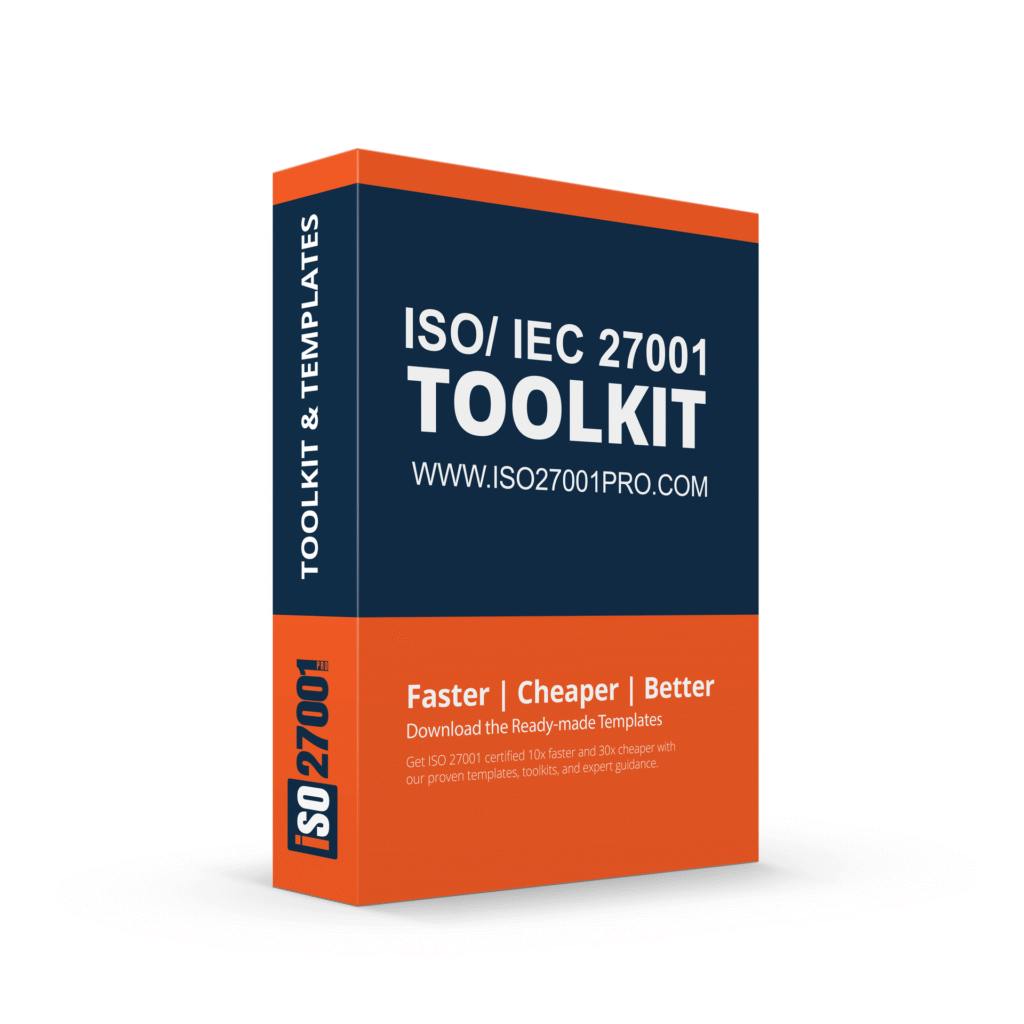
ISO 27001 Toolkit- Ultimate Edition With All You Need
The single biggest obstacle for most companies on their ISO 27001 journey is documentation. Creating dozens of policies, procedures, and records from scratch is an enormous task. It requires specialized knowledge, consumes hundreds of hours, and is highly prone to errors that can lead to a failed audit.
This is precisely where strategic preparation makes all the difference. Instead of reinventing the wheel, you can leverage a professionally designed solution.
The ISO 27001 Toolkit from iso27001pro.com is designed to eliminate this burden. It’s not just a collection of files; it’s a complete, audit-ready framework that provides:
- Professionally Written Templates: Get instant access to every mandatory policy, procedure, and record required by the standard.
- Comprehensive Risk Assessment Tools: Use our pre-built templates to conduct your risk assessment systematically and effectively.
- A Pre-Completed Statement of Applicability: Easily customize the SoA to reflect the controls relevant to your business.
- Internal Audit Checklists: Conduct your internal audits with confidence using our expert-guided checklists.
Using our toolkit transforms the documentation phase from a months-long headache into a streamlined, manageable task. It’s an investment that pays for itself by dramatically reducing consulting fees, saving countless internal hours, and increasing your chances of passing the certification audit on the first attempt.
Conclusion: Your Path to a Trusted Brand
Knowing how to get ISO 27001 certification is about understanding the steps and preparing for the journey. It is a strategic commitment that strengthens your defenses, builds unbreakable customer trust, and unlocks new business opportunities. By following a clear roadmap and using the right resources, you can navigate the process efficiently and effectively.
Don’t let the challenge of documentation slow you down or derail your project. Accelerate your journey and ensure your success with our comprehensive toolkit.
Visit iso27001pro.com to explore the ISO 27001 Toolkit and get started on your path to certification today!
Popular Posts


Copyright 2026 © ISO 27001 PRO LLC. All right reserved.